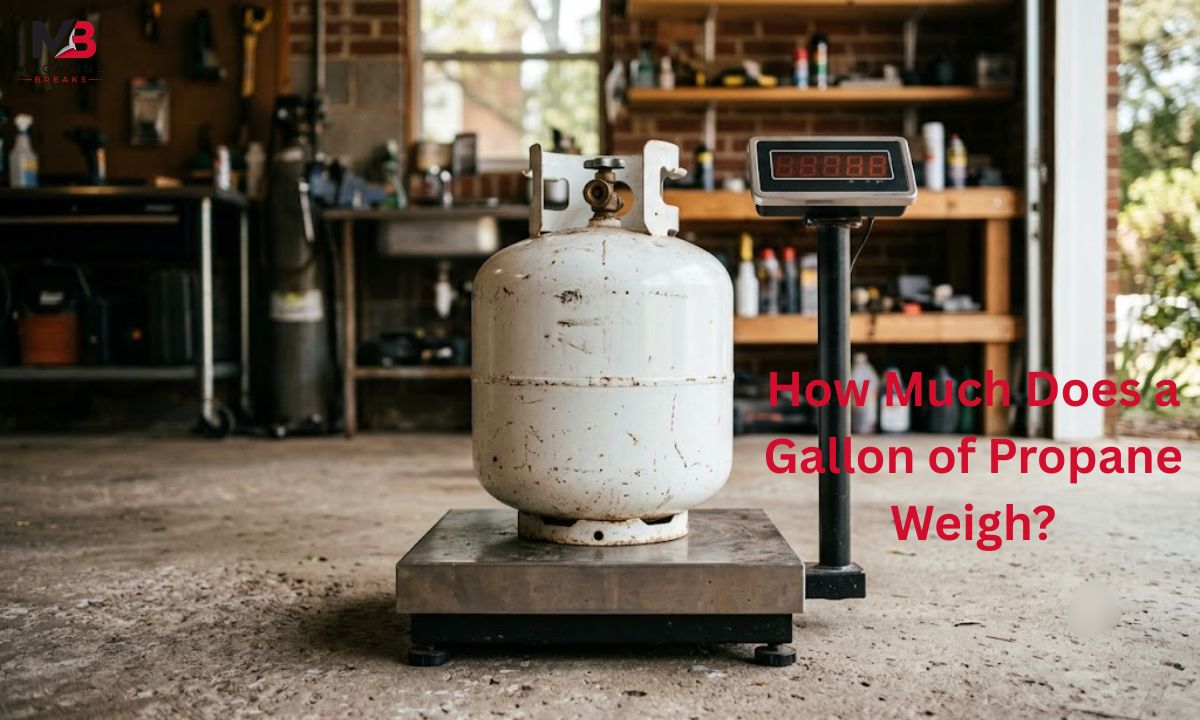
How Much Does a Gallon of Propane Weigh?
Ever stood at the hardware store staring at a propane tank wondering if you can actually lift it into your trunk? Or tried to figure out if your grill has enough fuel left for the weekend cookout? You are not alone. Most people have no idea what propane gallon weight actually means until they are stuck mid-burger flip with an empty tank.
Here is the quick answer: one gallon of propane weighs 4.24 pounds. That is your number. Memorize it and everything else about propane fuel weight becomes easy to figure out.
How Much Does a Gallon of Propane Weigh?
One gallon of propane weighs approximately 4.24 pounds or 1.92 kilograms. This is the standard number used across the entire energy industry, from your neighborhood gas station to massive commercial propane storage facilities.
Some delivery guys round it to 4.2 lbs for faster mental math on the job. Both numbers work fine for everyday propane fuel calculations.
The reason this number matters is simple. You buy propane by the gallon but your tank is labeled in pounds. Knowing propane gallon to pounds conversion saves you from guessing games every single time.
How Much Does Propane Weigh Per Gallon in Liquid Form?
Here is something most people do not think about. Propane inside your tank is not a gas. It is a liquid sitting under pressure, just waiting to vaporize the second it hits open air.
Liquid propane weight stays consistent at 4.24 lbs per gallon because the pressure inside the tank keeps its density stable. Temperature can cause slight shifts, but the number stays very close to that baseline inside a properly stored cylinder.
This matters because liquid propane density is what determines how much energy is packed into your tank. More liquid equals more cooking, more heating, more road trips in your RV.
Propane Density and Weight Per Unit (LPG and LP Gas)
You might see it called LPG, LP gas, or liquefied petroleum gas on the label. Same stuff, different names. The LP gas weight breaks down like this across different units:
Pounds: 4.24 lbs per gallon
Kilograms: 1.92 kg per gallon
Liters: roughly 0.51 kg per liter
So if you are in Canada and buying propane by the liter, it takes about 3.785 liters to equal one US gallon. That is your gallon to liter conversion sorted right there.
LPG weight stays the same whether it is in a backyard BBQ cylinder or a 500-gallon residential tank. Propane density does not change based on tank size.
Why Propane Weight Depends on State (Liquid vs Gas)
Liquid propane and gaseous propane are two completely different animals when it comes to weight.
Inside your pressurized tank, propane mass is stable and dense. The moment it leaves the valve, it expands into a gas and becomes much lighter by volume. But here is the sneaky part. Propane vapor is actually about 1.5 times heavier than regular air.
That is why LP gas detectors in RVs and homes sit low on the wall near the floor. If there is a leak, the gas sinks and pools at ground level. It does not float up and disappear. This is a real safety detail worth knowing.
Propane Tank Weight Chart and Common Sizes
Getting confused between empty propane tank weight and full propane tank weight is super common. The formula is simple:
Full Weight equals Tare Weight plus Gallons multiplied by 4.2 lbs
Tare weight is just the weight of the empty tank stamped on the collar. Every tank has it. Here is how the most common propane tank sizes stack up:
20 lb Propane Tank (Grill Tank)
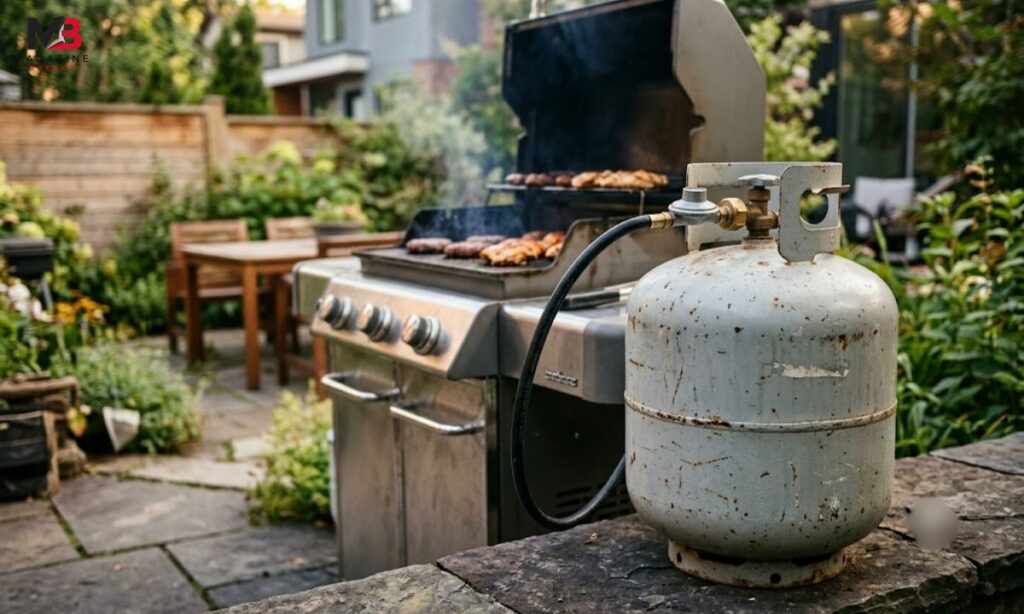
This is the classic blue exchange tank you swap out at Walmart or Home Depot. The 20 lb propane tank weighs between 16 and 18 lbs empty. Fill it up and you are looking at 36 to 38 lbs total.
It holds about 4.7 gallons of liquid propane at the standard 80 percent fill level. Perfect for backyard grills, patio heaters, and small camping setups.
If you are doing the hot water trick to check fuel level, pour warm water down the side and feel where the metal turns cold. That cold line is exactly where your propane tank fill level sits.
30 lb Propane Tank
The 30 lb propane tank is the workhorse of the camping and RV world. Empty weight sits around 24 lbs and it hits about 54 lbs when full.
It holds roughly 7 gallons of fuel, which gives you solid runtime for a travel trailer on a long weekend trip. Many towable RVs mount two of these on the front tongue for extended range.
Knowing the full propane tank weight here helps with tongue weight calculations on your trailer. Going over your hitch rating is a real problem people skip thinking about.
100 lb Propane Tank
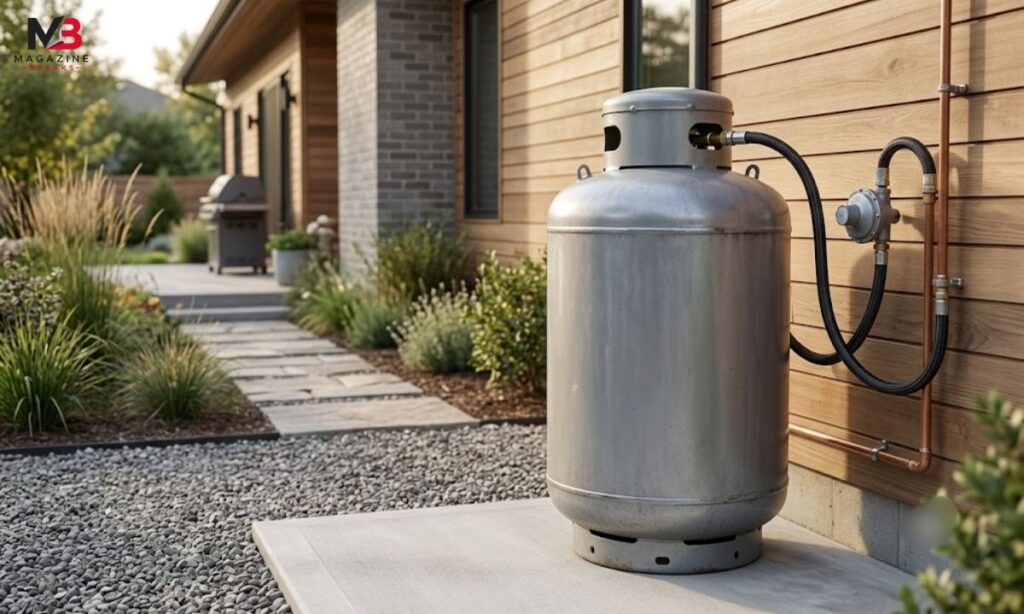
Here is where a lot of people get confused. A 100 lb propane tank means it holds 100 pounds of fuel, not 100 gallons. Big difference.
It weighs about 70 lbs empty and roughly 170 lbs when full. It holds around 23.6 gallons of liquid propane and works great for one or two home appliances like a gas range or fireplace.
Do not mix this up with a 100 gallon propane tank, which is a much larger unit used for home heating. The 100 gallon version weighs 215 lbs empty and 555 lbs full.
Propane Weight Per Gallon Conversions
Quick reference for propane gallon conversion across common units:
1 gallon equals 4.24 lbs
1 gallon equals 1.92 kg
1 gallon equals 3.785 liters
1 lb of propane equals roughly 0.236 gallons
These propane measurements are the foundation of every propane fuel calculation whether you are ordering a bulk delivery or just refilling a grill tank.
Is Propane Heavier Than Water or Gasoline?
Great question for a Saturday afternoon argument with your neighbor. Here is how propane vs gasoline weight and water stack up:
Propane: 4.24 lbs per gallon
Gasoline: 6.1 to 6.3 lbs per gallon
Water: 8.34 lbs per gallon
Propane vs water weight shows that propane is almost half as heavy as water by the gallon. That is why a full grill tank feels surprisingly manageable compared to carrying a gallon jug of water.
Gasoline sits in the middle and propane is the lightest of the three. Good news for your back when you are hauling tanks around.
Propane Tank Weight and Capacity Table
| Tank Size | Empty Weight | Full Weight | Gallon Capacity |
| 20 lb Cylinder | 16 to 18 lbs | 36 to 38 lbs | 4.7 gallons |
| 100 Gallon | 215 lbs | 555 lbs | 80 gallons usable |
| 250 Gallon | 485 lbs | 1,335 lbs | 200 gallons usable |
| 500 Gallon | 950 lbs | 2,650 lbs | 400 gallons usable |
This propane weight chart covers the most common residential propane tanks people deal with. Use it as your quick reference before any delivery or refill.
Factors That Affect Propane Weight Per Gallon
Temperature and Pressure
Propane pressure and temperature are tightly connected. When it gets hot outside, liquid propane expands inside the tank. When it gets cold, it contracts. The actual fuel weight does not change but the volume it takes up does shift.
This is why you might notice your gauge reading slightly differently on a hot July afternoon versus a cold January morning. The fuel is still there. It is just behaving differently under different propane expansion conditions.
How Heavy Is Propane

A single gallon of LP gas weighs 4.24 lbs. A full standard grill tank with fuel is around 38 lbs. A full 500 gallon propane tank tips the scales past 2,600 lbs and requires professional installation on a concrete pad.
So propane ranges from something you carry with one hand to something a crane has to move. All depends on the tank size you are working with.
The 80 Percent Fill Rule
This rule exists because of that expansion factor. Suppliers always leave 20 percent of the LP gas cylinder empty as a safety buffer.
If a tank were filled to 100 percent on a cold morning and then sat in direct summer sun, the pressure buildup could be dangerous. The 80 percent fill rule is not the supplier being stingy. It is a genuine safety standard governed by NFPA 58 regulations.
Real-World Examples of Propane Weight
Transport and Handling Considerations
A full 20 lb BBQ propane tank weighs close to 38 lbs. That is manageable for most adults but worth remembering before you toss it in your trunk one-handed.
Always transport propane cylinders upright and secured so they cannot roll or tip. A loose tank bouncing around on the highway is not just annoying. It is genuinely dangerous.
BBQ Grills

Running out of propane mid-cookout is a universal human tragedy. Weigh your tank on a bathroom scale, subtract the tare weight stamped on the collar, and divide by 4.2. That tells you exactly how many gallons you have left.
No fancy gauge needed. Just basic propane fuel weight math and a scale you already own.
RV Tanks
RV owners need to track propane tank capacity carefully because it affects total vehicle weight and tongue load. Two full 30 lb propane tanks add over 100 lbs to your setup.
That matters when you are close to your tow vehicle’s payload limit. Always factor in full propane tank weight when calculating your RV’s total load before hitting the road.
Home Heating Systems
A 500 gallon propane tank fully loaded weighs over 2,650 lbs. A 250 gallon propane tank comes in around 1,335 lbs when full. These are not DIY installations.
They need professional delivery, proper grading, and solid foundations. Your propane supplier handles all of this, but knowing the weights helps you plan your property layout and access routes before installation day.
Conclusion
One gallon of propane weighs 4.24 pounds. That one number unlocks every calculation you will ever need, from checking your grill tank before a cookout to planning a whole-house heating setup.
Keep the propane gallon to pounds conversion handy, always check your tare weight before filling, and never skip the 80 percent fill rule. It is there for a reason.
Got a propane question we did not cover? Drop it in the comments. Someone else is probably wondering the same thing.

Jack is the creator and author behind Measuremently, a platform focused on measurements, dimensions, and size comparisons. Passionate about making measurements easy to understand, Jack shares practical measurement guides, easy-to-follow comparison articles, and educational content to help readers visualize lengths, weights, heights, and distances with confidence.