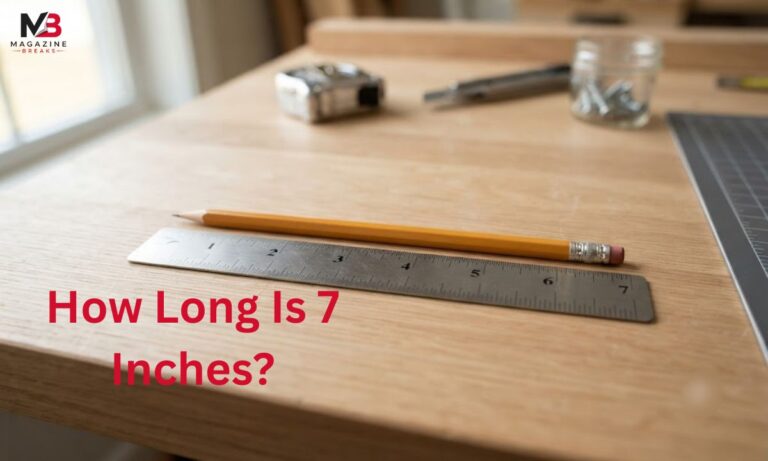
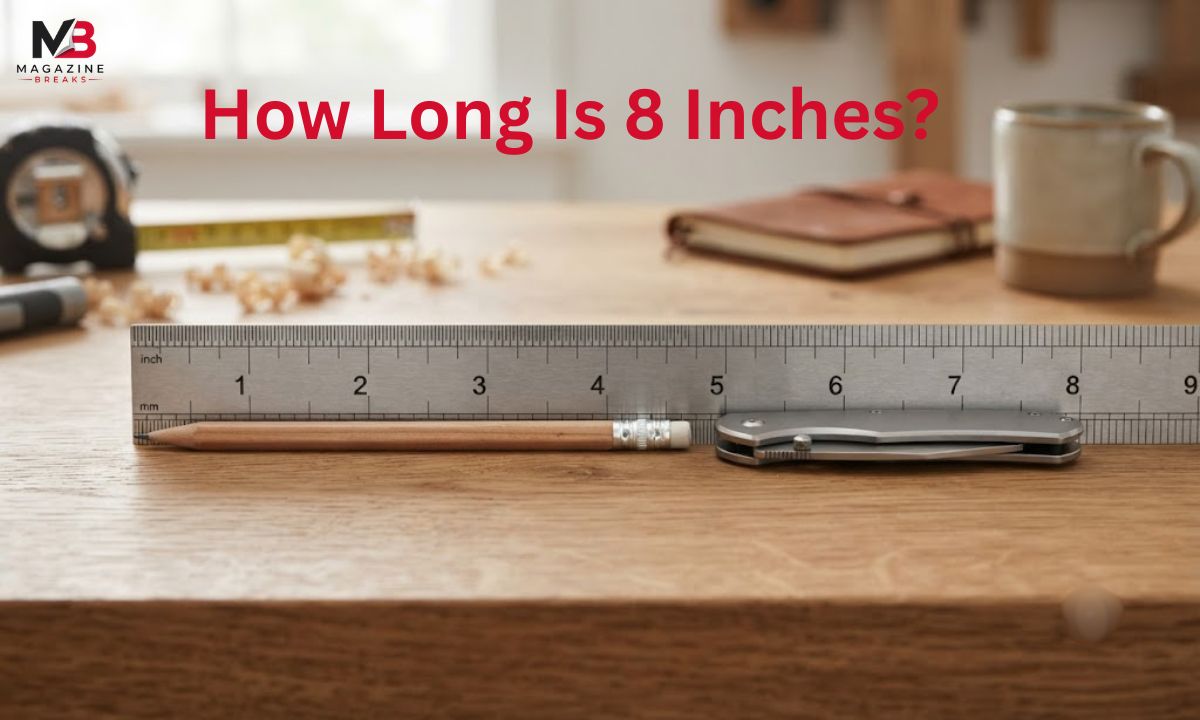
How Long Is 8 Inches? Easy Real-Life Examples
8 inches equals 20.32 cm, 203.2 mm, or 0.67 feet. That’s about the length of a TV remote or a stretched hand span, so if you needed a quick answer, that’s it right there.
Still can’t quite picture it? You’re not alone. Numbers on a screen don’t mean much until you connect them to something you can touch, so let’s fix that right now with real objects you already know.
What Does 8 Inches Actually Feel Like?
Stretch your hand out, thumb tip to pinky tip, as wide as it goes. That’s your hand span measurement, and for most adults it lands close to 8 inches, which makes it one of the easiest built in references you already carry around.
This is exactly why so many tools, gadgets, and kitchen items land in this size range. It fits the human hand naturally, so it feels comfortable to hold, carry, and use every single day.
8 Inches in Different Units (Conversion Table)
Sometimes you need the metric version, especially for online shopping or international products. Having the numbers laid out side by side makes comparing sizes across listings a lot easier.
| Unit | Value |
| Inches | 8 inches |
| Centimeters | 20.32 cm |
| Millimeters | 203.2 mm |
| Meters | 0.2032 meters |
| Feet | 0.67 feet |
| Yards | 0.22 yards |
So if someone asks how long is 8 inches in cm, the answer is 20.32 cm. This kind of imperial to metric conversion comes up more often than you’d think, especially when a product listing only gives you one unit and you need the other.
Why 8 Inches Is So Common in Real Life
Designers don’t pick sizes randomly, they test what feels right in the hand and what fits neatly in a bag, drawer, or pocket. 8 inches sits in a sweet spot, long enough to be genuinely useful but short enough to stay portable and easy to store.
That’s why this exact length keeps showing up in kitchen tools, stationery, and everyday gadgets. It’s not a coincidence, it’s smart, deliberate design built around how people actually use things.
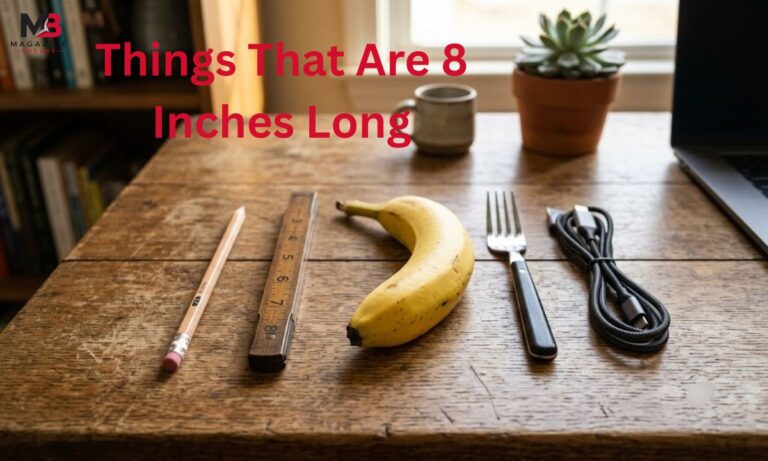
17 Things That Are 8 Inches Long (Real-Life Examples)
Here’s the fun part. These are real-life examples of 8 inches you’ve probably touched this week without ever noticing the exact size.
Human Hair (8 Inches Length)

This hair length comparison is one people relate to fastest, since it’s tied to something visual and personal. Hair grown to about 8 inches usually falls somewhere between the ear and the shoulder, depending on someone’s height and hair type.
Picture a friend growing out a bob or letting their hair down from a short cut. That in between stage, right there, is roughly 8 inches.
Hand Length / Hand Span

Your thumb to pinky distance, fully stretched, lands close to 8 inches for most adults. That means you’re carrying your own personal measuring tape everywhere you go, whether you realize it or not.
This makes it a genuinely handy trick for quick estimates when you’re out shopping and don’t have a tape measure on you. Just stretch, compare, and you’re close enough.
Smartphone + Case (Combined Length)

A bare phone is usually a touch shorter than 8 inches on its own. But add a chunky smartphone with case, especially a rugged one, and you get pretty close to that mark.
Next time you’re holding your phone, notice how close it feels to the hand span you just tested. It’s a small comparison, but it makes the size click instantly.
Magazine Width

Magazine width often lands right around this size, and that’s really not by accident. Publishers picked this width because it’s comfortable to hold and easy to flip through on a couch, in bed, or on a train.
If it were much smaller, reading would feel cramped. If it were bigger, it would get awkward to hold with one hand, so 8 inches became the practical middle ground.
Ribbon (Gift Wrapping Piece)
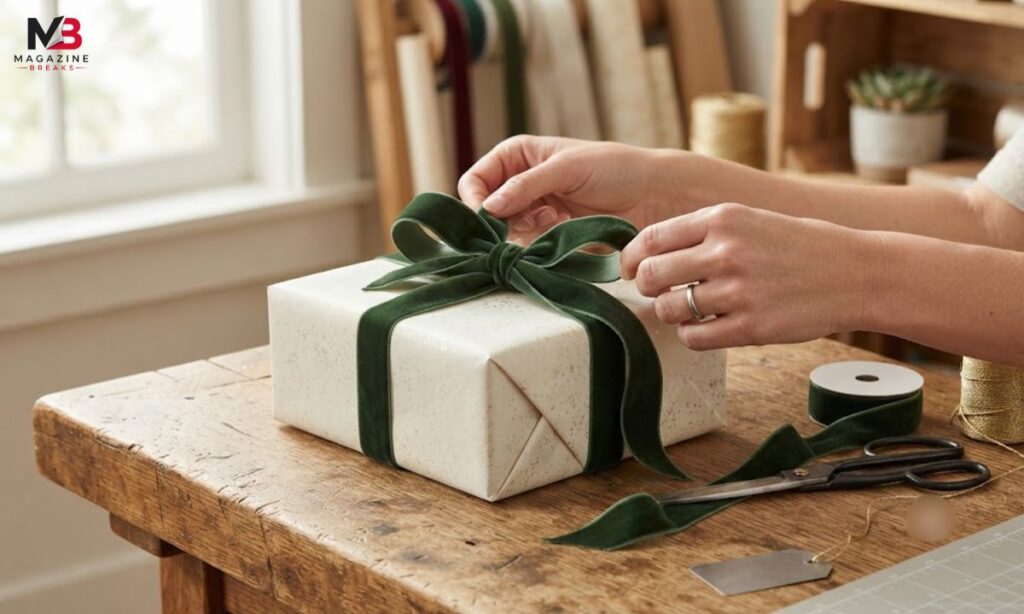
A typical ribbon length cut for tying a gift bow usually sits close to 8 inches. That’s enough to wrap a full loop and tie a clean knot without wasting extra material.
Your hands already know this size from wrapping birthday presents or holiday gifts, even if you never actually measured it. It’s one of those sizes people estimate correctly by instinct.
Backpack Pocket Width

Check your backpack right now. The front pocket, the one that usually holds notebooks, chargers, and pens, tends to measure close to this backpack pocket width.
Bag makers size these pockets around what people actually carry every day, which is exactly why this measurement keeps showing up across different brands and styles.
Hardcover Notebook

A smaller notebook size, the kind that fits easily into a bag or backpack, often runs close to 8 inches in height. It’s a size that balances writing comfort with portability really well.
Big enough to write comfortably without feeling cramped, small enough to toss into a bag without a second thought. That balance is exactly why it’s such a popular notebook size.
Envelope (Large Card Size)
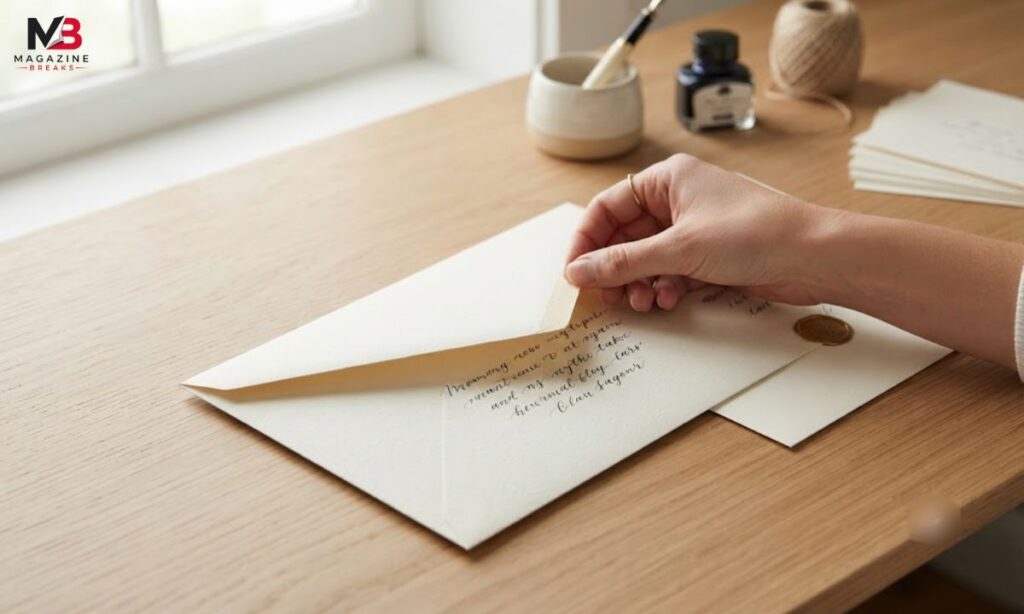
Bigger envelope size options, the kind made for greeting cards and folded documents, tend to land near this length too. That sizing isn’t random either.
It’s built that way so paper doesn’t crease, bend, or get damaged when you slide it in. A slightly larger envelope protects whatever’s inside a lot better.
Ruler (Short Version)

A shorter, pocket sized compact ruler often measures close to 8 inches, unlike the standard 12 inch ruler most people remember from school. It’s built for portability rather than full length measuring jobs.
If you happen to have one in a drawer, pull it out right now. It gives you an instant, exact, no guesswork reference for this whole conversation.
Kitchen Tongs (Small)

Smaller kitchen tongs, the kind used for lighter tasks like flipping pancakes or tossing a salad, are often close to this size. They’re designed for control rather than heavy duty cooking jobs.
Shorter tongs give you better grip and precision, and they also take up a lot less drawer space. That’s a small but real reason this size keeps popping up in kitchens.
TV Remote Control
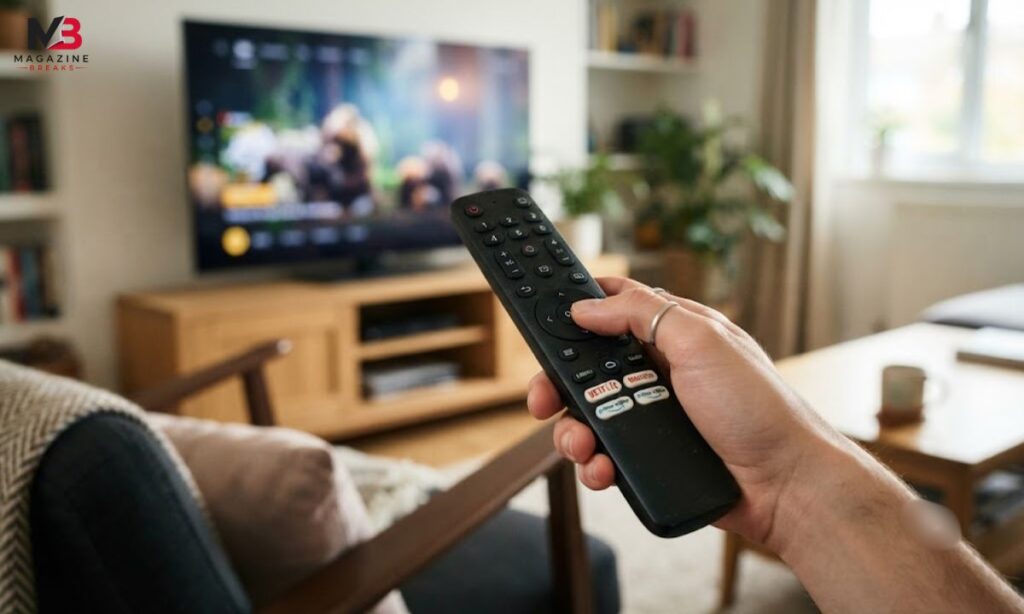
Most remotes run somewhere between 6 and 8 inches, and the larger ones hit this mark almost exactly. It’s a size that fits comfortably in one hand without feeling bulky.
Pick up your remote tonight and take a real look at it. That’s your visual reference for 8 inches, sitting right there on your coffee table.
Shoe Length (Small Size)

Smaller shoe sizes, especially kids sizes, often come close to 8 inches in overall length. It’s one of the more physical, tangible ways to picture this measurement.
If you’ve got little ones running around the house, grab one of their shoes and hold it up. That gives you an immediate, real world sense of the size.
Tablet Cover / Case

Smaller tablet cover dimensions often land near this size, built specifically to match compact devices closely. Manufacturers design these covers around the exact tablet they’re meant to protect.
If you own a mini tablet, its case is a solid, ready made stand in for this measurement. No need to grab anything else, it’s already in your bag.
Desk Organizer Tray

A small desk organizer tray, the kind that holds pens and sticky notes, is often built around this exact length. It’s sized to be useful without taking over your whole workspace.
Big enough to actually hold your everyday desk items, small enough that it doesn’t eat up all your desk space. That balance is intentional, not accidental.
Bread Knife (Compact)
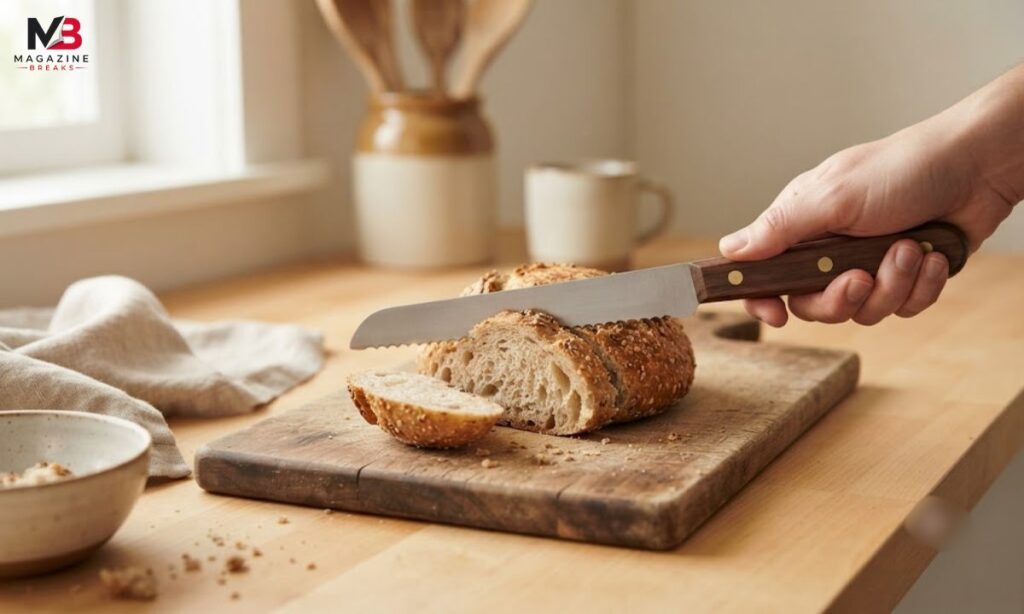
Compact bread knife length blades often sit in this range, shorter than a full sized chef’s knife but still plenty capable. They’re built for control rather than raw cutting power.
They’re great for slicing rolls, bagels, or small loaves without needing to pull out a huge, unwieldy blade. Perfect size for smaller kitchen tasks.
Picture Frame (Small)
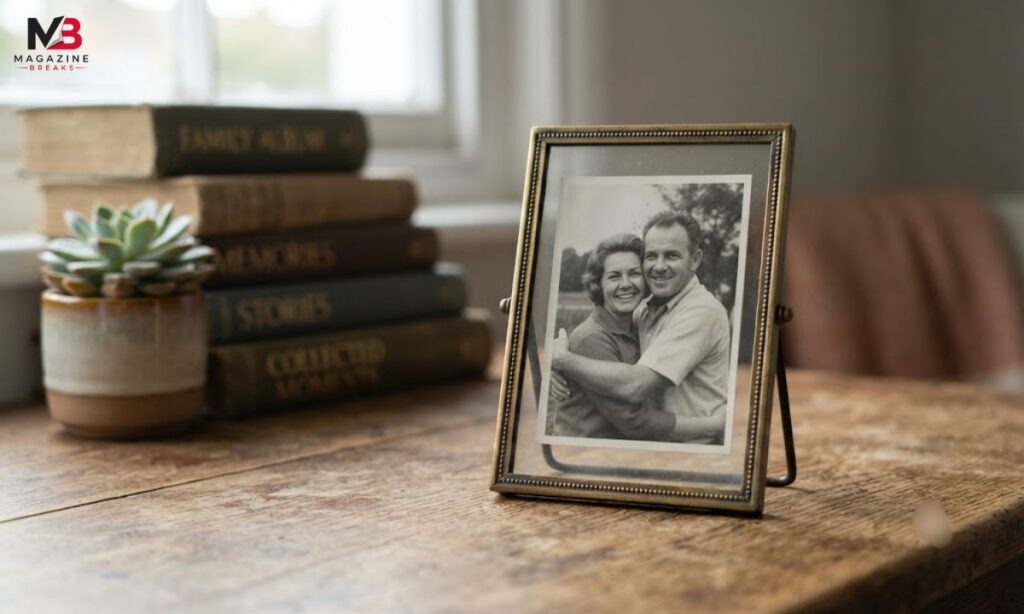
Small picture frame dimensions, especially the kind made for desks, often measure close to 8 inches on one side. It’s a size built for shelves, desks, and side tables.
Look at any small frame sitting on a shelf or desk near you. That’s your real world visual for this exact measurement, right in front of you.
Laptop Sleeve (Compact Width)

A slim laptop sleeve size, made for smaller laptops or tablets, often measures close to this width. It’s built to keep things protected without adding bulk.
This keeps everything slim, light, and easy to slide into a bigger bag without feeling like you’re carrying extra weight. Practical design, plain and simple.
How to Measure 8 Inches Without a Ruler
No tape measure around? No problem at all. Here’s how to measure 8 inches without a ruler using stuff you probably already have nearby.
Use Your Hand Span
Stretch your thumb and pinky as far apart as they’ll go, and for most adults, that lands close enough to call it 8 inches. It’s not going to be lab accurate, but it doesn’t need to be for everyday use.
This trick works great for quick, casual estimates when you’re shopping or just trying to picture a size in your head. Once you know your own hand span, you’ll use it constantly.
Use a Familiar Object
Grab a TV remote, a small notebook, or a compact ruler, and hold it right next to whatever you’re trying to size up. This kind of object size reference beats guessing every single time.
It’s fast, it’s free, and it uses stuff that’s probably already sitting on your desk or in your bag. No apps, no tools, just a quick side by side comparison.
Combine Smaller References
If you don’t have a single item close to this size, stack a few smaller ones together. A credit card runs about 3.37 inches, so two placed side by side gets you close to 7 inches.
Add a thumb width gap on top of that, and you’ve basically nailed 8 inches using nothing but stuff already sitting in your wallet. Simple math, real accuracy.
A Quick Way To Remember 8 Inches Forever
Here’s a trick that actually sticks. Measure your own hand span once with a real ruler, then remember that number for good, since it rarely changes much over time.
From that point on, you’re carrying a built in visual measurement guide everywhere you go. No app, no tool, just your own hand doing the work for you.
Common Mistakes People Make When Estimating Length
People often assume every hand span is exactly 8 inches, but hand size actually varies quite a bit from person to person. Bigger hands, smaller hands, it all shifts the number slightly one way or the other.
Another common slip up is trusting online product photos to judge size accurately. Photos get cropped, zoomed, and angled in ways that throw off how big something actually looks, so always check the listed 8 inch conversion in the description instead of guessing from the image.
Conclusion
Understanding 8 inches gets a whole lot easier once you stop thinking in numbers and start thinking in objects. A TV remote, a small notebook, or your own stretched out hand all give you a real, lasting sense of the size, way better than staring at 20.32 cm on a page.
Next time you spot this measurement on a label, you won’t need to picture a ruler in your head. You’ll already know exactly what it looks like, and that’s the whole point.

Jack is the creator and author behind Measuremently, a platform focused on measurements, dimensions, and size comparisons. Passionate about making measurements easy to understand, Jack shares practical measurement guides, easy-to-follow comparison articles, and educational content to help readers visualize lengths, weights, heights, and distances with confidence.